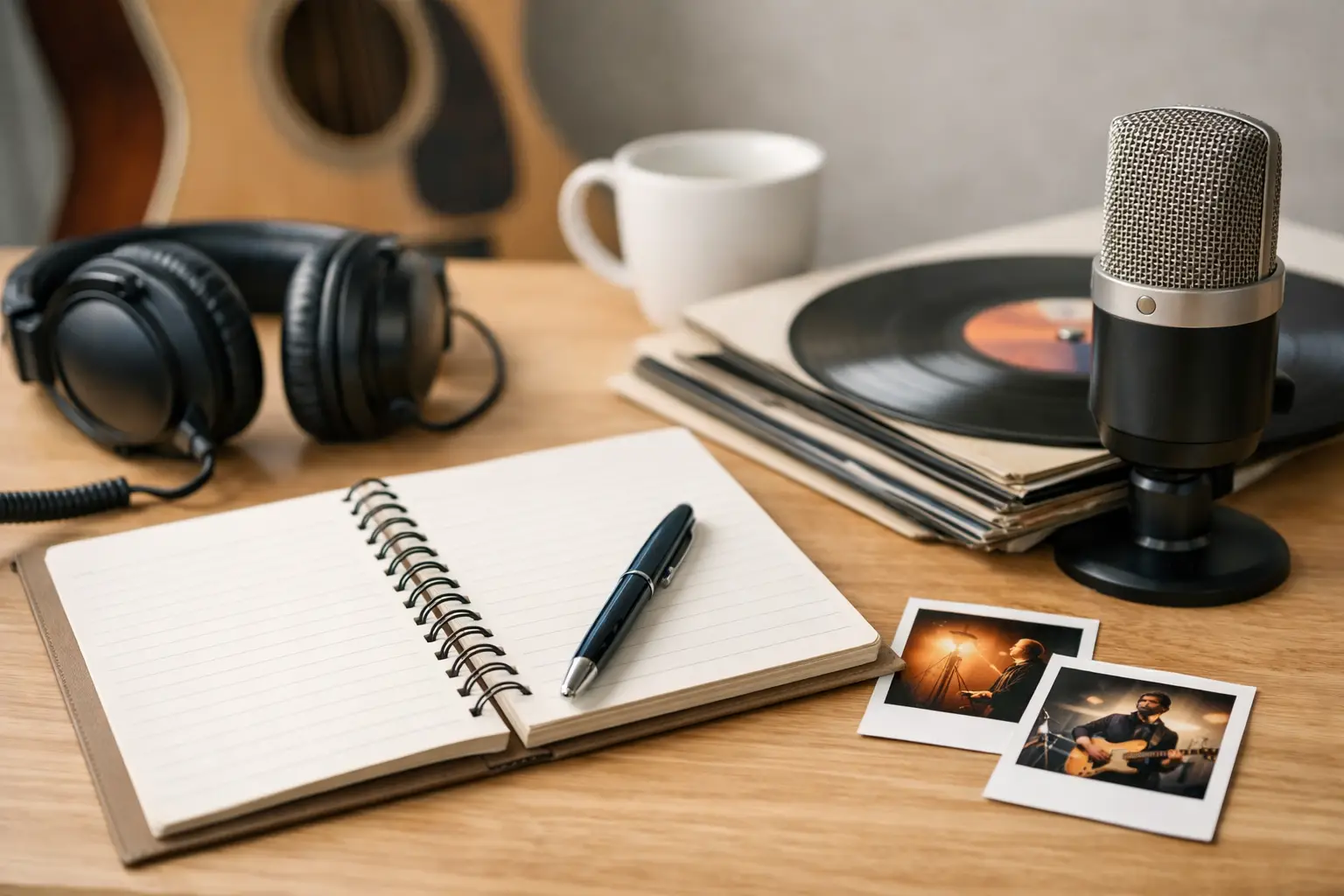
Most people freeze when they try to explain a song that feels good but refuses to sit still. That is usually the moment how to describe indie music becomes harder than just pressing play. Indie is not one sound. It is a stance, a texture, a set of choices, and sometimes just a weird little world a song builds for itself.
If you call every hazy guitar track “dreamy” and every sad vocalist “raw,” you flatten the whole thing. Indie deserves better language than that. Not fancier language. Better. More exact. More human.
How to describe indie music without sounding vague
Start with the obvious problem: “indie” is both a genre label and a cultural shortcut. Some people use it to mean independent release. Some mean guitar-based alt pop. Some mean anything slightly off-center that is not built for radio first. All three show up in real conversation, so context matters.
That is why the best descriptions do not stop at the word indie. They build around it. If you say a track is indie, follow it with what kind of indie. Lo-fi indie rock. Bedroom indie pop. Folk-leaning indie. Post-punk indie. Experimental indie with electronic noise under it. The extra words do the real work.
A good description usually answers four things at once: what it sounds like, how it feels, what influences it carries, and what makes it different. If one of those is missing, the sentence can still work. If all of them are missing, you are probably just naming a vibe board.
Describe the sound before the story
A lot of people jump straight to emotion. That makes sense, because indie music often feels personal before it feels technical. But if you want your description to land, begin with sound.
Listen for texture first. Is the guitar jangly, washed-out, brittle, fuzzy, needle-thin, or warm? Are the drums crisp and dry or blown out and roomy? Does the synth feel cheap in a good way, like an old machine waking up, or clean and glassy? Texture gives indie music its fingerprint.
Then notice space. Some indie tracks feel crowded, like every layer is rubbing against the next. Others leave huge gaps, where a single bass note can change the whole emotional temperature. A sparse arrangement can make a song feel intimate. A cluttered one can feel chaotic, anxious, or alive. Neither is better. Just different.
Tempo matters too, but not only in a fast-versus-slow way. A midtempo indie song can still feel restless if the drums keep pushing ahead of the vocal. A slow song can feel floating rather than heavy if the rhythm section barely touches the ground. Describe the motion, not just the BPM.
Use mood, but make it specific
Saying a song is “sad” is not wrong. It is just unfinished.
Indie music often lives in mixed emotions. Detached but tender. Nostalgic but irritated. Romantic in a damaged way. Hopeful under static. If you can name the emotional contradiction, your description gets stronger instantly.
For example, a track might sound lonely without sounding defeated. It might feel sweet but emotionally withheld. It might carry the energy of a private joke told after a bad week. Those small distinctions are where your writing stops sounding generic.
Mood also changes depending on the production. Reverb can make a vocal feel distant, haunted, dreamy, or protected. Distortion can read as aggression, but it can also feel vulnerable, like the song is fraying in public. In indie music, the mood is often built as much by recording choices as by lyrics.
Vocals tell you what kind of honesty the song wants
A lot of indie listeners respond to voice before anything else. Not because the singer is technically perfect, but because the voice carries point of view.
So describe the vocal presence. Is it murmured, cracked, deadpan, breathy, conversational, buried, fragile, nasal, or almost spoken? Does it sound like the singer is confessing, documenting, dissociating, performing, or barely holding eye contact with the mic?
This is where people often misuse the word raw. Raw can mean emotionally direct, but it can also mean underproduced, uneven, or intentionally rough-edged. If you mean the singer sounds close and exposed, say that. If you mean the take feels imperfect in a way that helps the song, say that. Precision beats mood-board writing every time.
Lyrics matter too, but not all indie songs are lyric-first. Some work through fragments, images, and tone more than narrative. If the writing is vivid, call it vivid. If it is diaristic, surreal, dry, self-aware, or evasive, that says more than calling it poetic and moving on.
Production is not background in indie music
In more commercial pop, production is often polished to disappear. In indie, production choices are usually part of the identity.
That means you should mention them when they shape the song. Maybe the recording is lo-fi enough to feel homemade, but not so degraded that the melody gets lost. Maybe the mix is intentionally uneven, with vocals tucked back behind the instruments. Maybe the song uses tape hiss, clipped peaks, room noise, or cheap drum machine tones to create character rather than hide flaws.
This is also where trade-offs matter. Lo-fi can feel intimate, but it can also make a song emotionally distant if everything is too fogged over. A pristine mix can reveal detail, but it can sand off some personality if the song depends on roughness. Indie music often lives in that tension between intention and imperfection.
Reference genre, but do not trap the song inside it
The easiest way to describe indie music is with comparison. That is useful, but it can get lazy fast.
Instead of dropping three band names and calling it a day, explain what the song borrows or bends. Maybe it has the jangly pull of college rock, the softness of bedroom pop, and a post-punk rhythm section underneath. Maybe it starts like folk and dissolves into ambient noise. Maybe it feels indie only in attitude – anti-polished, intimate, self-directed – while the actual sound leans electronic.
This matters because indie is porous. It steals freely. It mutates. A song can sound like synth pop, slowcore, garage rock, and internet-era collage at the same time. That does not make the label useless. It just means the label is a doorway, not the full map.
How to describe indie music in one sentence
If you need a short version, build it like this: sound, mood, distinction.
Something like: “It is a lo-fi indie pop track with soft synth haze, half-whispered vocals, and a lonely but strangely warm atmosphere.” That works because it gives the ear something to hear and the mind something to feel.
Another example: “It sounds like post-punk stripped of swagger – tight bass, dry drums, detached vocals, and tension that never fully breaks.” That sentence has shape. It says what the song is doing, not just what shelf it belongs on.
The main mistake is overstuffing. If your sentence has ten adjectives, none of them stick. Pick the two or three details that define the track most clearly.
What people usually get wrong
The biggest mistake is treating indie as a synonym for soft, sad, or acoustic. A lot of indie music is noisy, sharp, playful, danceable, ugly on purpose, or emotionally cold. Another mistake is confusing low budget with artistic intent. Some music sounds rough because it had to. Some sounds rough because that roughness is the point. Sometimes it is both.
People also confuse obscurity with depth. A hard-to-find band is not automatically more meaningful than a popular one. Indie is not a moral upgrade. It is a creative ecosystem with its own habits, clichés, and risks.
And yes, there are clichés. Overused reverb. Meaningless nostalgia. Underwritten lyrics hidden behind a nice cassette texture. The same goes for every scene. Loving indie music does not require pretending every unfinished idea is genius.
A better vocabulary for indie music
If your descriptions feel repetitive, swap broad words for words with edges. Instead of “dreamy,” try blurred, floating, washed-out, narcotic, or suspended. Instead of “emotional,” try bruised, restrained, aching, panicked, numb, or yearning. Instead of “unique,” say what is actually unusual – maybe the rhythm lurches, the vocal is deliberately flat, or the song refuses a clean chorus.
Good writing about music is not about sounding smarter than the song. It is about matching its shape. If the track is minimal, your sentence can be clean and hard. If the track is unstable and layered, your language can carry a little friction too. That kind of writing feels closer to listening.
For artists making experimental work, this matters even more. A vague description can make a strange song sound interchangeable. A sharp one gives the listener a way in without reducing the mystery. That is useful whether you are tagging your own release, writing a caption, talking to a friend, or trying to explain why one tiny track on the internet hit harder than a polished major-label single.
The best way to describe indie music is to stay honest about what you actually hear. Not what the algorithm says it resembles. Not what the scene expects you to say. Just the texture, the mood, the choices, the tension. Start there, and your words will sound like they belong to a real listener.