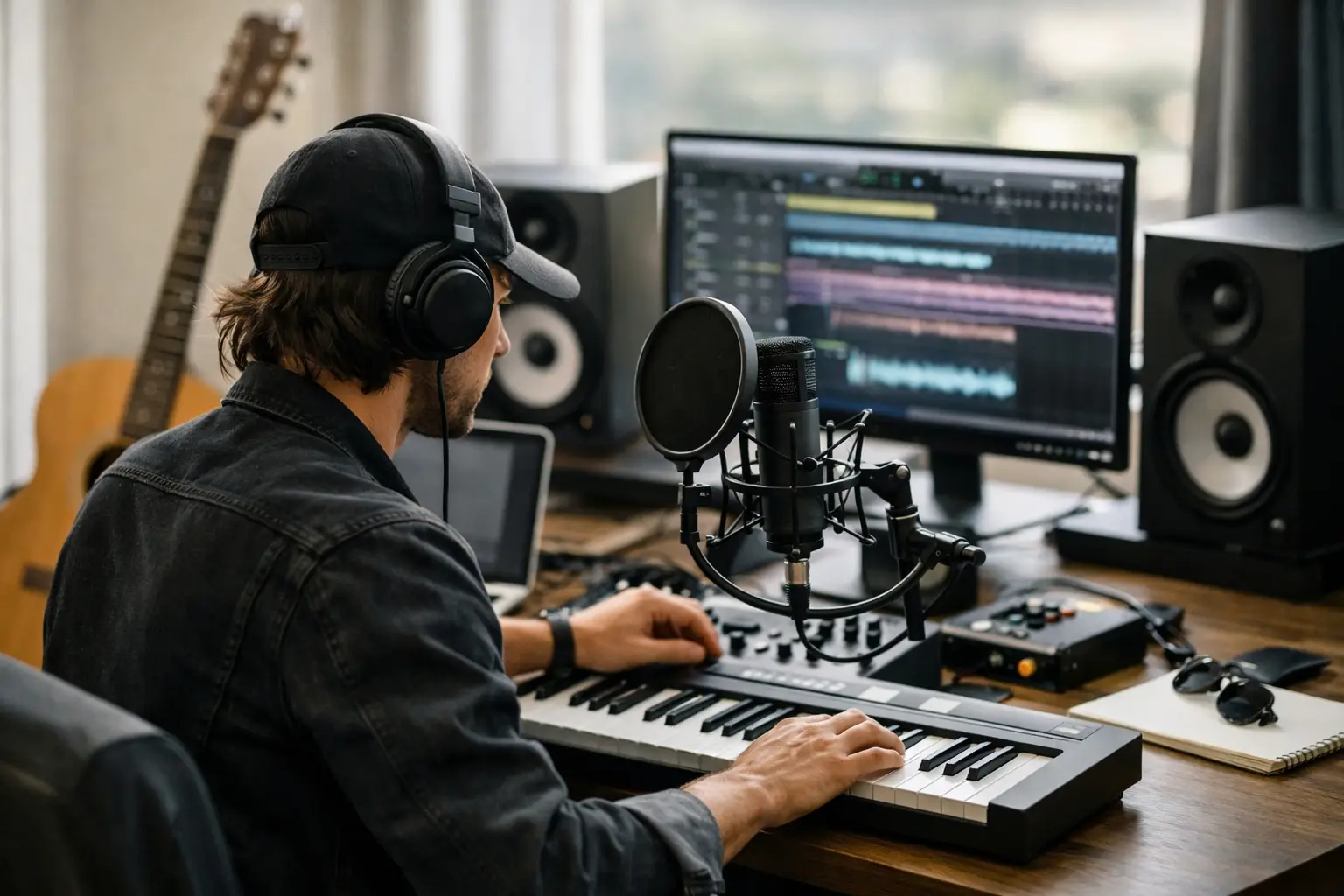
Most artists do not fail because they lack talent. They fail because they build nothing around the work. If you want to learn how to be independent music artist, start there. Not with a fantasy career. Not with a label fantasy. With a body of work, a point of view, and a system that lets people find you.
How to be an independent music artist without copying everyone
Independence is not just releasing songs on your own. Plenty of people do that and still sound like they are waiting for approval. Being independent means your taste leads. Your decisions are not built around what a playlist editor might like, what a trend report says, or what another artist posted last week.
That sounds romantic until rent shows up. So be honest about the trade-off. Freedom gives you control, but it also gives you responsibility. You are the artist, but you are also the release manager, the editor, the quality control, and often the marketing department. If that feels heavy, good. It means you are looking at the real thing.
The first move is defining what kind of artist you actually are. Not your dream version. Your real version. What sounds keep showing up in your work? What visual language follows you around? What emotional space do people enter when they hear your music? If your answer is too broad, people will not remember you. If your answer is specific, the right people will.
A niche is not a cage. It is a signal.
Build a sound before you build a brand
A lot of artists rush into visuals, logos, content calendars, and promotional plans before they have made ten strong tracks. That is backward. Your sound is the center. Everything else is proof of it.
You do not need to sound polished in a major-label way. You do need intention. A rough track with identity beats a clean track with no personality. If your music is experimental, let it be experimental on purpose. If it is melodic, dark, fragmented, loud, soft, or difficult, commit to that instead of sanding it down for imaginary mass appeal.
The easiest way to test your sound is simple. Play your track next to five artists you respect. Do you disappear? Or do you still feel like yourself? If you vanish into the playlist, keep working.
Your identity has to be legible
People discover independent artists fast. One post. One thumbnail. One clip. One sentence in a bio. If your identity is vague, they move on.
This does not mean inventing a fake persona. It means making your real artistic identity easier to read. Your images, titles, cover art, captions, and video fragments should feel like they came from the same mind. The goal is not polish. The goal is coherence.
That matters even more if you work across formats. Music and visual art can strengthen each other when they share the same emotional world. They become confusing when they look like separate projects fighting for attention.
You do not need a giant website or a perfect portfolio. You need one clean home base and a few active channels where people can actually see the work. Keep it simple. Show the strongest pieces. Give people a way to move from curiosity to deeper attention.
Release before you feel fully ready
Perfectionism kills more independent music careers than lack of skill. If you wait until every track is flawless, you delay feedback, delay growth, and train yourself to hide.
That does not mean posting every half-finished sketch. It means knowing the difference between unfinished and scared. A finished track can still be imperfect. Sometimes that is where the life is.
Release strategy matters, but not in a fake guru way. You do not need twenty steps and a launch spreadsheet that makes you hate your own music. You need consistency. One strong single can do more than a bloated album no one has context for. A small run of deliberate releases often works better than disappearing for two years and returning with a massive project nobody was waiting for.
If you are new, think in sequences. A few singles. Then maybe a small EP. Let each release teach you something about your audience, your process, and your stamina.
Audience is not the same as numbers
An independent artist can get trapped by metrics fast. Views, streams, followers, saves, reach. Some of that matters. Most of it matters less than people pretend.
A small audience that actually listens is worth more than inflated numbers with no attachment. You want people who return, not people who scroll past. You want recognition. You want someone to hear ten seconds and know it is you.
So talk to the audience like a person, not a campaign. Show fragments of process if they are real. Share finished work more than vague announcements. Say what the piece is. Say where it came from. Say less, but mean it.
The internet rewards repetition. That can feel annoying, but it is true. People usually need multiple encounters before they care. Posting once and assuming nobody liked it is not a serious read of reality. Keep showing the work.
Use platforms, but do not live inside them
Social platforms help people find you. They are not your identity. Build on them, but do not hand them your entire existence.
That means keeping your music distributed where people listen, keeping your visuals easy to access, and having a simple place online that belongs to you. It does not need to be elaborate. It just needs to be stable. Think of platforms as roads and your own space as the room people enter when they decide to stay.
This is especially true for artists making niche or experimental work. Algorithms are inconsistent with anything that does not fit a familiar box. If your work is stranger, slower, or harder to classify, you need direct channels more than viral luck.
Money changes the conversation
If you want to know how to be independent music artist for real, you have to deal with money without acting weird about it. Independent does not mean anti-income. It means you decide how your work becomes sustainable.
That might be streaming, direct sales, commissions, merch, visual art, production work, licensing, live shows, or some mixed setup that shifts over time. There is no pure model. Most independent artists build hybrid income because one source alone is unstable.
The trade-off is obvious. The more ways you earn, the more operational work you create. But refusing to think about money usually does not protect your art. It just makes you dependent on bad opportunities later.
Price your work in a way that respects the time it took to make it. You do not need inflated luxury pricing if that is not your audience. You also do not need to train people to expect everything for free.
Learn the boring parts well enough
Contracts, splits, metadata, file management, rights, taxes. None of this is glamorous. All of it matters.
You do not need to become a legal machine. You do need enough knowledge to avoid obvious damage. Know who owns what. Know where your files are. Know what name your releases are under. Know how your collaborators are credited. Know what you agreed to before you click yes.
A lot of artists avoid administration because it feels like a betrayal of creativity. It is not. It protects creativity. Chaos is expensive.
Independence can get lonely
This part gets skipped because people like the image of the lone creator. But isolation can distort your judgment. You can start second-guessing good work, overvaluing bad work, or making decisions from panic because nobody is reflecting anything back to you.
You do not need a huge team. You do need a few real people. Maybe one producer friend with honest ears. Maybe a visual collaborator. Maybe another artist who understands the release cycle and can tell you when you are spiraling. Small circles work.
Community does not have to dilute your voice. The right people sharpen it.
Stay difficult in the right ways
The pressure to become easier is constant. Easier to categorize. Easier to market. Easier to consume in fifteen seconds. Sometimes adapting makes sense. Sometimes it strips the reason your work mattered in the first place.
You have to know which parts of your art are flexible and which parts are not. Maybe your posting style can change. Maybe your release timing can change. Maybe your cover art can become clearer. Fine. But if the core tension, texture, or weirdness of your music is the thing that makes it yours, protect it.
Independent artists who last are not always the loudest. They are the clearest. Clear about taste. Clear about limits. Clear about what they are making and why.
If you build that kind of clarity, people feel it. They may not all understand it immediately. That is okay. The right audience usually recognizes authorship before it recognizes genre.
Make the work. Make it legible. Put it where people can find it. Repeat without begging. That is a real start. And if the path feels less like joining an industry and more like building your own corner of the internet, you are probably getting closer.